Kamayan: The Filipino Tradition of Eating with Your Hands
A little rice, a bite of ulam, and good company: explore the meaning, technique, and everyday pleasures of kamayan.
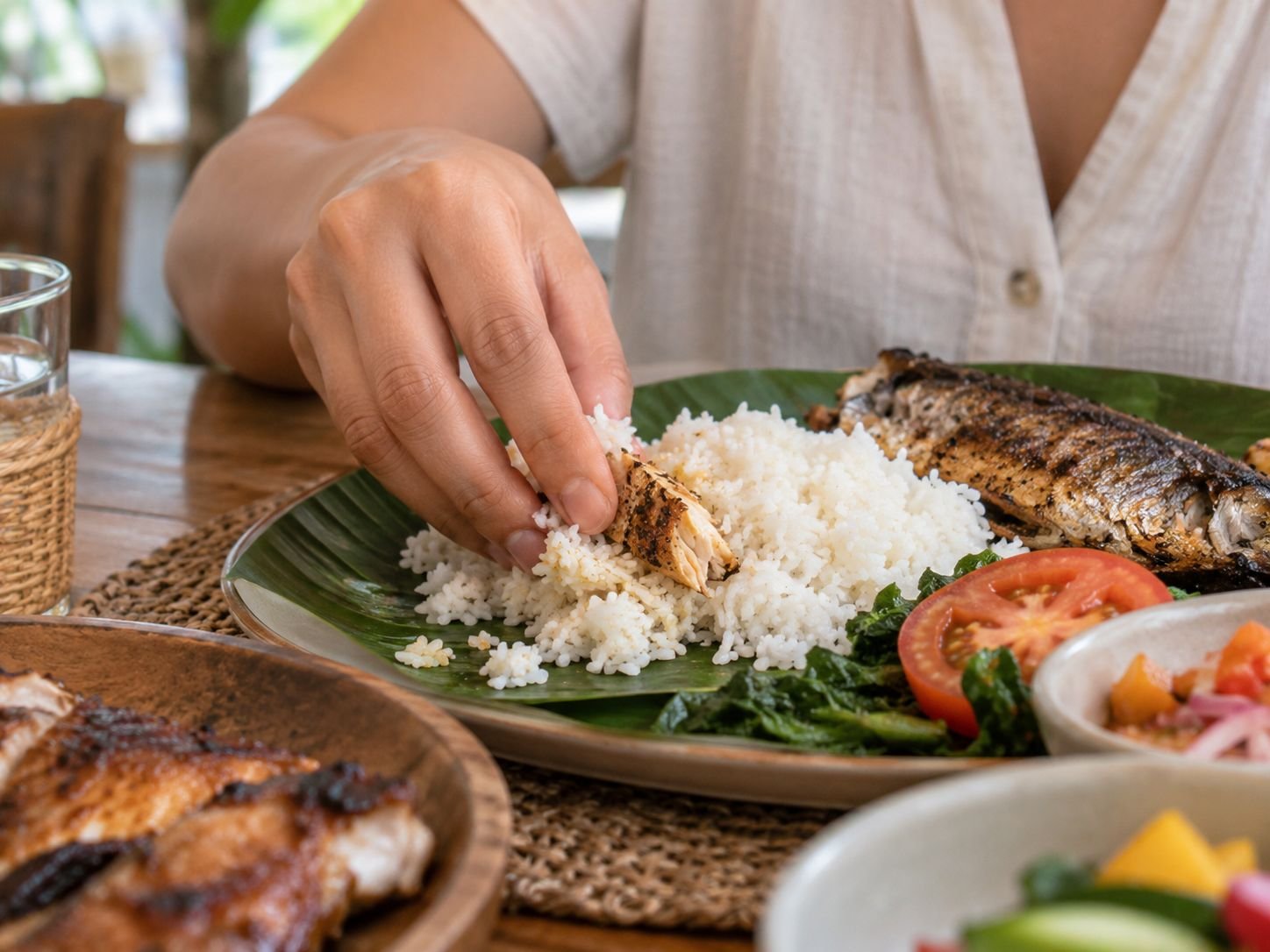
A plate of rice and freshly grilled fish can be an invitation to set down your cutlery. Gather a small bite with your fingertips, add a little of the dish beside it, and bring the two together. This is kamayan, a Filipino way of eating that makes your hands part of the meal.
For people who grew up with it, the movement can feel familiar and effortless. For a first-time diner, it takes a little practice. Either way, there is no need for an elaborate feast to begin.
What does kamayan mean?
Kamayan comes from the Tagalog word kamay, meaning hand. In a dining context, it refers to eating with your hands. Rice often forms the base of a bite, joined by a small portion of ulam: the dish eaten with the rice.
Eating by hand is part of many food cultures around the world. In the Philippines, kamayan sits alongside other everyday dining habits, including eating with a spoon and fork. Preferences vary between people, households, occasions, and dishes.
Some diners describe food eaten this way as more enjoyable. Feeling the rice and shaping each mouthful gives you control over the mix of flavours and textures. For others, the pleasure comes from memories of family meals, outings, or a favourite dish best eaten with the fingers.
Kamayan and the boodle fight
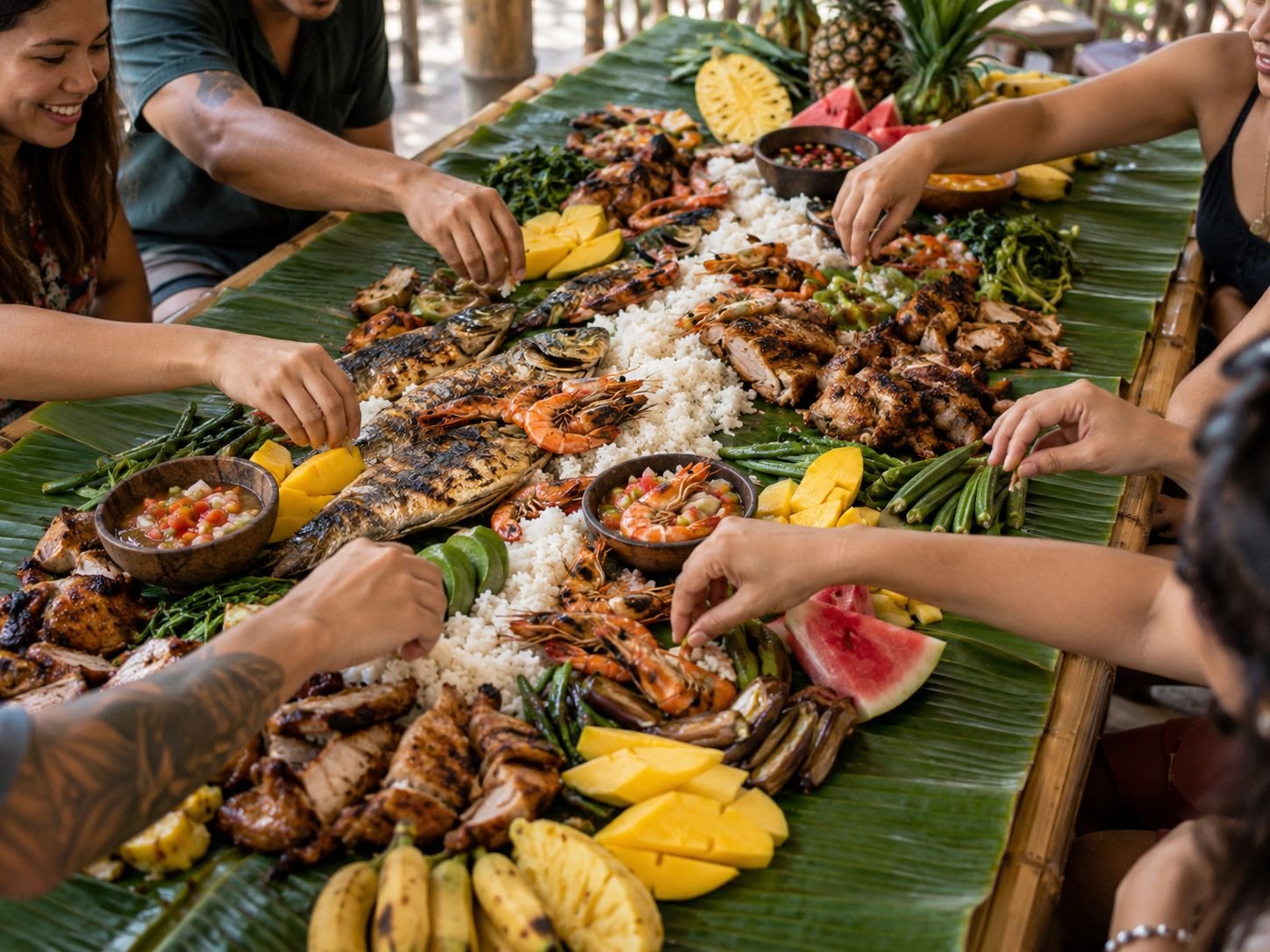
You may have seen photographs of rice, grilled food, vegetables, and fruit spread across banana leaves. That communal feast is often called a boodle fight. Kamayan describes eating by hand; a boodle fight is a particular shared meal that uses that style of eating. As Filipino cook Vanjo Merano explains in his guide to boodle fights, a simple meal at home can also be kamayan.
The boodle fight has a military association and has also become a way to gather friends and families around food, as discussed by SBS Filipino. A long table and banana leaves make a striking setting, but they are not requirements for eating with your hands.
How to eat with your hands
Start with food that is comfortable to touch and a small portion on your own plate. Wash your hands thoroughly with soap and water before eating.
- Build a small bite. Bring a little rice together with a small piece of ulam. Remove bones or shells first.
- Gather it with your fingertips. Use your fingers and thumb to gently press the food into a loose mound. You want it to hold together without squeezing it into a dense ball.
- Lift it towards your mouth. Keep your fingertips close together and lean forward slightly if that feels comfortable.
- Use your thumb to guide the bite. Gently nudge the food from your fingertips into your mouth. Small mouthfuls are easier to manage while learning.
Let your fingertips do most of the work. If the rice falls apart, try less food in the next bite. There is no need to rush or to get every movement right immediately.
Food, comfort, and table manners
Grilled fish, chicken, pork barbecue, and lechon are familiar companions to rice at a kamayan meal. Choose manageable pieces, especially when learning. Broth and very saucy dishes can stay in bowls, with spoons available.
At a shared table, follow your host's lead and leave space for everyone to reach the food. Use serving utensils to move food from shared dishes to your own portion, and keep dipping sauces in individual bowls. Wash your hands again if you handle a phone or other objects during the meal.
Using cutlery is a reasonable choice for comfort, accessibility, or preference. A welcoming table makes room for different ways of eating; nobody needs to prove their appreciation of Filipino food by finishing a meal without a spoon.
Try kamayan at home
Begin with a meal you already enjoy, a clean plate, and time to sit down. You can try a few bites by hand before deciding how you want to eat the rest. If someone at the table knows the technique, watching their movements can be more helpful than memorising instructions.
For a meal to try, follow our Chicken Kamayan Platter with Rice and Fresh Vegetables. The separate recipe brings together grilled chicken, rice, and fresh vegetables for four people.
The pleasure of kamayan can be as simple as finding your favourite balance of rice and ulam in a single bite, then making the next one just the way you like it.